Wood and vinyl are the two materials homeowners ask about most, especially for backyard privacy. Both can look great and both can last, but they get there in very different ways. At 76 FENCE Main Line, we install both, so we don’t have a horse in this race. Here’s the honest comparison we give on walkthroughs across the Main Line.
The quick comparison
Look and feel
Wood: natural grain and warmth that suits stone and colonial homes. Vinyl: clean, uniform lines in white, tan, gray and other colors, including wood-grain textures.
Maintenance
Wood: periodic staining or sealing, plus the occasional board replacement. Vinyl: an occasional wash with soap and water.
Upfront cost
Wood: usually mid-range, with pressure-treated pine more economical than cedar. Vinyl: usually mid-to-upper range.
Long-term
Wood: weathers and needs care over time. Vinyl: won’t rot, splinter or need paint, which offsets the higher starting price for many homeowners.
How our climate affects each material
Southeast Pennsylvania is tough on fences. We get humid summers, freeze-thaw winters, heavy spring rains and the occasional nor’easter or heavy snow. Here’s how each material handles that.
Wood in Pennsylvania weather
Wood absorbs moisture. Through wet springs and humid summers it swells; in dry spells and winter it shrinks. Over time, that movement can lead to warping, cupping and loosened fasteners, and constant dampness near the ground invites rot. Cedar has natural oils that help it resist rot and insects, and it weathers to a soft silver-gray if left untreated. Pressure-treated pine is treated to resist rot and insects and is a sturdy, budget-friendly choice. Either way, a good sealer or stain slows weathering and keeps the color you want.
Vinyl in Pennsylvania weather
Vinyl doesn’t absorb water, so it won’t rot, and insects aren’t interested in it. It shrugs off humidity and rain. Quality vinyl is also formulated to resist fading in the sun. It does expand and contract with temperature, so proper installation leaves room for that movement. In very cold weather, vinyl becomes less flexible, so a hard hit from a snow shovel or a thrown branch in January is more likely to crack a panel than the same hit in July. The good news: individual components can often be replaced.
Which looks better on a Main Line home?
That’s a matter of taste, but a few patterns hold. Wood, especially cedar, tends to feel at home with fieldstone colonials, Tudors and wooded lots, where a natural look blends into mature landscaping. A horizontal cedar fence also looks sharp with modern architecture.
Vinyl suits crisp, tidy looks: a white privacy fence behind a brick colonial, a vinyl picket fence in front of a Victorian, or a pool enclosure that needs to stay clean with little effort. Newer developments and HOAs often favor vinyl for its uniform appearance, though your HOA’s guidelines come first.
Privacy, pets and pools
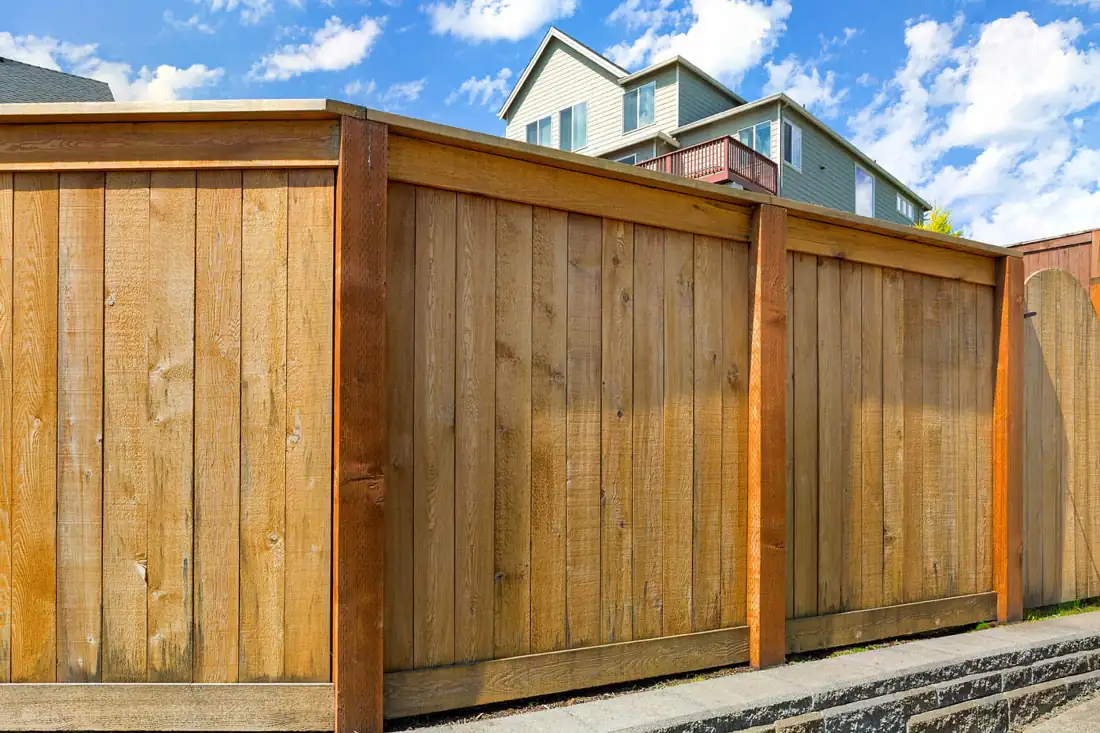
Both materials make excellent privacy fences. Vinyl panels are typically solid, with no gaps. Wood can be built fully solid with board-on-board construction, or with small gaps for a semi-privacy look that lets breezes through.
For dogs, both work well when built at the right height. Vinyl’s smooth surface is hard to climb and won’t be chewed like wood can be. See our guide to the best fence for dogs for more.
For pools, either can serve as a barrier if it meets code. In Pennsylvania, pool barriers must be at least 48 inches high, with self-closing, self-latching gates that open outward, away from the pool. Your township inspector has final say. Learn more on our pool fences page.
What about cost over time?
We don’t publish per-foot prices, but in general wood costs less upfront and vinyl costs less to maintain. If you plan to stay in your home for many years and don’t want to stain a fence every few seasons, vinyl often makes sense. If you love the look of natural wood, want to start at a lower price or are fencing a large area, wood is a great choice. Our pricing guide walks through what drives cost for any material.
Whichever you choose, installation quality matters as much as the material. Both need posts set below the frost line, typically 30″–36″ in our area (local code governs). Learn why in our post depth guide.
Can’t decide? Consider composite, which combines a wood-like look with low maintenance, or aluminum if you don’t need full privacy. Compare every option on our materials page.
Ready for a fence you'll love?
Book a free, no-pressure estimate. Zero dispatch fees — and we handle permits, HOA paperwork and the 811 call.
Our take
There’s no single right answer. Wood wins on natural character and starting price. Vinyl wins on low maintenance and consistency. We offer and honor manufacturer warranty coverage on every fence we install, and during a free walkthrough we’ll show you samples of both and talk through what fits your home, budget and HOA. Book your free estimate or call or text 484-779-6307. More questions? Visit our fence FAQ.