
Few home projects involve your neighbors quite like a fence does. Whether you’re replacing an old fence along a shared line or putting up a new one for the first time, questions come up fast. Whose fence is it? Who pays? Which side faces out? At 76 FENCE Main Line, we help homeowners navigate this all the time. Here’s a practical overview. It’s general information, not legal advice; for a specific dispute, a surveyor or real estate attorney is the right resource.
The general rule: it depends on where the fence sits
In most cases, a fence belongs to the owner of the land it sits on. If your fence is entirely on your side of the property line, it’s generally yours: you choose it, you pay for it, and you maintain it. If it sits right on the line, or partly on each property, ownership and responsibility can get murkier, and that’s when neighbors often share the decisions and costs by agreement.
The catch is that many people don’t know exactly where their property line is. An old fence, a row of shrubs or the edge of a lawn isn’t a reliable boundary. On older Main Line lots, fences and hedges may have been placed decades ago without a survey.
Start with a survey
The best way to avoid confusion is to know your line. If you have a property survey from when you bought your home, find it. If you don’t, or if the line isn’t clearly marked on the ground, consider hiring a licensed surveyor to locate and mark the boundary before your fence goes in.
Many municipalities also ask for a plot plan or survey with a fence permit application, so this step often does double duty. Our guide to fence permits on the Main Line explains more.
Set it just inside your line
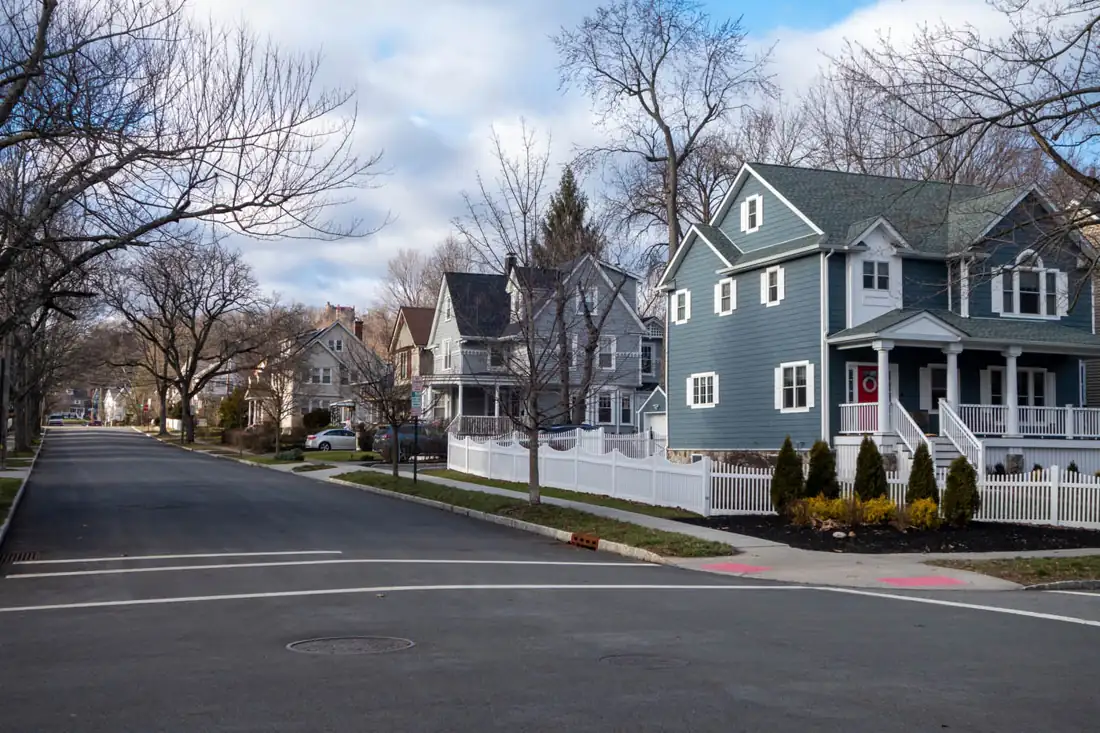
Many homeowners choose to place a new fence slightly inside their own property line rather than directly on it. That keeps ownership clear and means you can maintain, repair or replace the fence without needing your neighbor’s permission. It also avoids any chance of accidentally building on the neighbor’s land. Your township may also have setback rules for fences. Rules vary; we check them for you before installation.
Which side faces the neighbor?
Many fences have a “finished” side and a “structure” side where the posts and rails show. Some municipalities and HOAs require the finished side to face outward, toward the neighbor or the street. Even where it’s not required, facing the finished side out is widely considered good etiquette, and it often looks better from the street.
If you’d like both sides to look good, consider styles that are attractive on both faces, such as board-on-board wood privacy fences, most vinyl panels, and aluminum or ornamental steel.
Sharing the cost
There’s no one-size-fits-all rule for splitting the cost of a fence between neighbors. Some neighbors split it evenly because they both want the fence; others have one owner pay for a fence that sits on their own land. If you do agree to share a fence on the line, put the agreement in writing: who pays what, what the fence will look like, who maintains it, and what happens if one of you sells.
Keeping it friendly
- Talk first. A quick conversation before the fence goes in prevents most problems.
- Share the plan. Show them the style, height and location. Neighbors appreciate not being surprised.
- Give notice about install day. Crews may need to work near the line, and neighbors may want to move plants or pets.
- Think about their view. A semi-privacy style or a lower height where it’s not needed can keep things neighborly.
- Replace carefully. If an existing fence straddles the line, agree with your neighbor before removing it.
What about an old fence on the line?
This comes up often on established Main Line streets. If an old fence straddles the boundary and you want to replace it, talk to your neighbor and check the survey first. Removing a fence that’s partly theirs without agreement can create hard feelings or a dispute. Once you’re aligned, we can tear out and haul away the old fence as part of your project. If it just needs work, see our fence repair page.
If there’s a real disagreement about where the line is, pause and get a survey. Building on the wrong side can be costly to undo.
Ready for a fence you'll love?
Book a free, no-pressure estimate. Zero dispatch fees — and we handle permits, HOA paperwork and the 811 call.
We help you get it right
During your free estimate, we’ll look at the boundary, review your survey if you have one, and help you choose a placement and style that works for you and your neighbors. We also handle permits, HOA approvals and the PA One Call (811) locate. Read more in our fence FAQ, or book your free estimate or call or text 484-779-6307.