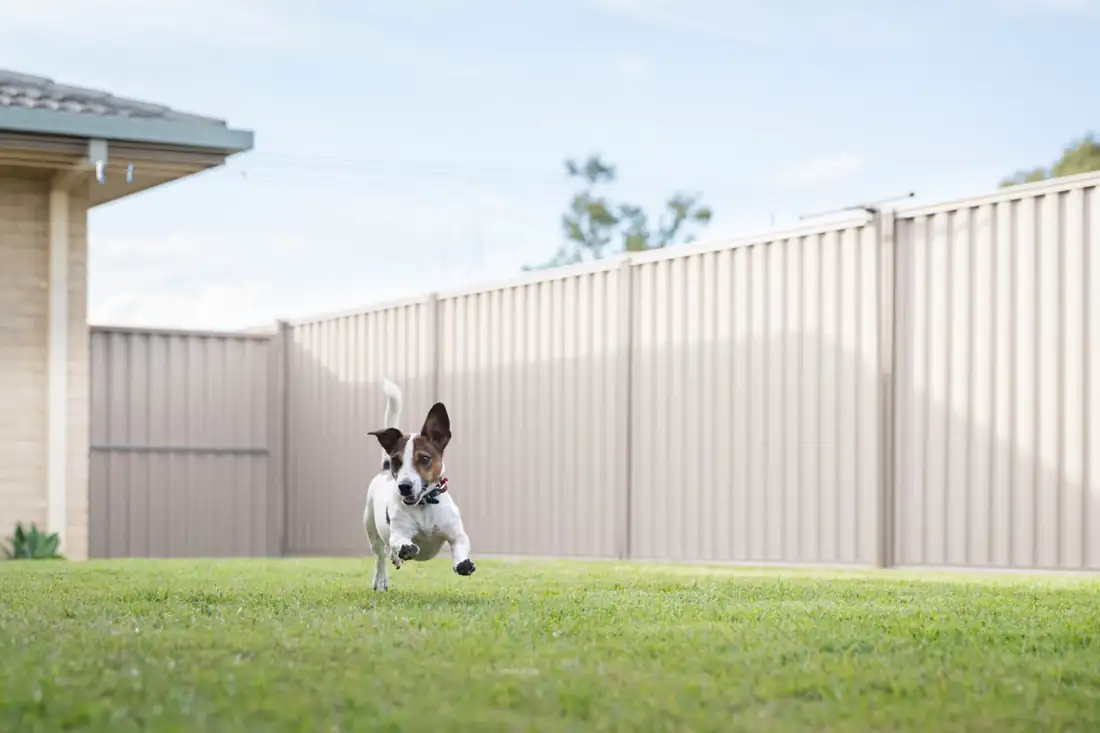
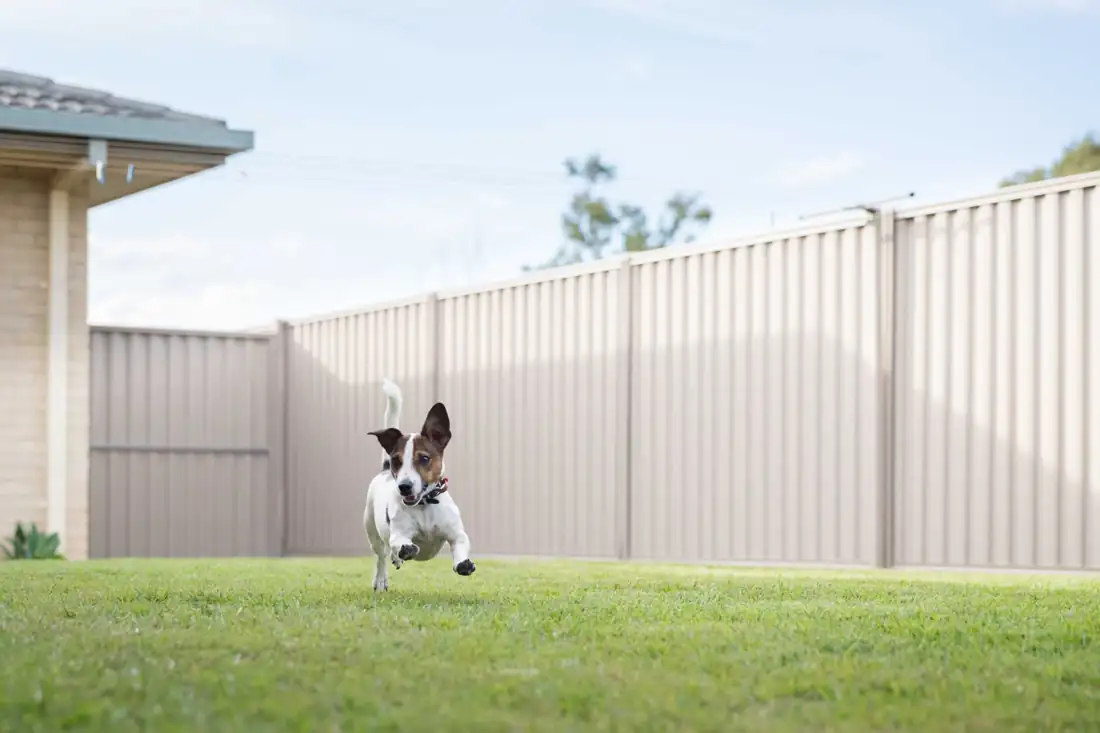
A good pet fence means opening the back door and not worrying. It sounds simple, but every dog has its own way of testing a fence: small breeds squeeze through gaps, athletic breeds jump or climb, terriers dig, and some dogs just wait for someone to leave the gate open. At 76 FENCE Main Line, we design pet fences around the animal that will actually live with them, choosing height, spacing, bottom treatment and gate hardware to match.
Start With Your Dog’s Habits
Squeezers
Small dogs and puppies slip through wide pickets and gaps under gates. Tight picket spacing, solid panels and a low gap at the bottom keep them in.
Jumpers and climbers
Athletic dogs can clear a short fence easily. Taller fences with no horizontal rails on the yard side give them less to push off.
Diggers
Terriers and other diggers can tunnel under a fence. Keeping the bottom close to grade and adding buried wire or a concrete mow strip in problem spots helps.
Barkers and reactors
Dogs that react to passersby often calm down behind a solid fence that blocks the view. A privacy fence can make a real difference.
Best Materials for Pets
Vinyl privacy and semi-privacy panels are smooth, hard to climb and easy to hose off. Wood can be built tall and solid, and we can keep boards close to the ground. Aluminum works for well-behaved dogs and pairs well with pool fences; puppy-picket panels with extra pickets at the bottom help with small breeds. Black vinyl-coated chain link is a durable, budget-friendly way to enclose a large area and blends into landscaping better than bare galvanized.
For a deeper comparison, read our guide to the best fence for dogs, or browse vinyl, aluminum and chain link.
Details That Make or Break a Pet Fence
- Gates. Most escapes happen at the gate. We recommend self-closing hinges and latches your dog can’t nudge open, placed where kids and guests will actually close them. See our gates page.
- Bottom clearance. On uneven ground, gaps open up under panels. We follow the grade closely and can add fill or trim boards where the ground dips.
- Corners and ends. The spot where a fence meets the house, a shed or a neighbor’s fence is a common weak point. We close those gaps carefully.
- Nothing to climb. Keep rails, AC units, woodpiles and benches away from the fence line or on the outside.
- Hardware on the outside. Rails and brackets facing out give climbers fewer footholds.
Main Line Yards and Dogs
Older Main Line lots often have mature trees whose roots cross the fence line, clay soil that gets slick after heavy spring rain and rocky schist that makes digging slow. Those conditions can leave gaps at the bottom of a fence if the installer isn’t careful. We plan post locations around roots when we can, set posts typically 30″–36″ deep in our area so frost doesn’t heave them, and check the bottom line after panels go in. Local code governs post depth.
On larger properties, you don’t always need to fence the whole lot. A dedicated dog run or a fenced section off the back door can be more practical and more affordable, with a lighter split rail or open aluminum fence elsewhere. Split rail can work for dogs, too, when lined with welded wire mesh.
Invisible Fences and Real Fences
Some homeowners use an electronic pet containment system alongside a physical fence. A real fence keeps other animals and people out as well as keeping your dog in, and it doesn’t depend on batteries or training. If you use both, let us know where the wire runs so we can avoid cutting it during installation.
Ready for a fence you'll love?
Book a free, no-pressure estimate. Zero dispatch fees — and we handle permits, HOA paperwork and the 811 call.
Getting Started
Andrew Taylor, our General Manager, meets most customers on site. Tell him about your dog, where they’ve gotten out before and how you use the yard, and he’ll recommend options that fit. Estimates are free with no dispatch fees. We handle the permit, any HOA approval and the PA One Call (811) locate, and we offer and honor manufacturer warranty coverage on every fence we install.
Call or text 484-779-6307 or book your free estimate, and give your dog a yard they can enjoy safely.