Walk through almost any older neighborhood and you’ll spot it: a fence that leans, a gate that no longer latches, a post that seems to have risen a few inches out of the ground. More often than not, the problem started below ground. At 76 FENCE Main Line, we think post depth is one of the most important and least talked-about parts of a fence installation, especially in a climate like ours.
The short answer
Fence posts need to go below the frost line so the freeze-thaw cycle can’t push them upward. In southeast Pennsylvania, frost depth is typically 30″–36″ in our area; local code governs. Your exact depth also depends on fence height, material, soil and whether the post supports a gate.
What is the frost line, and why does it matter?
The frost line is the depth to which the ground typically freezes in winter. Above that line, the soil freezes and thaws repeatedly. Below it, the ground stays more stable.
When water in the soil freezes, it expands. In soil that holds a lot of moisture, that expansion can grab onto a post and lift it slightly. When the ground thaws, soil settles back into the gap underneath instead of letting the post drop back down. Repeat that over many winters and a shallow post slowly ratchets upward. This is called frost heave, and it’s one of the most common reasons fences lean, rails bow and gates sag.
Our winters make this a real concern. Southeast Pennsylvania doesn’t just freeze once and stay frozen; it swings above and below freezing again and again. Add heavy spring rains that saturate the ground, and you have ideal conditions for heave.
Main Line soil: clay, rock and roots
Frost depth is only half the story. What the ground is made of matters just as much.
Clay-heavy soil
Much of the region has clay-heavy soil, which holds water. Wet clay is especially prone to frost heave, and it can also drain poorly around a post. Good drainage at the bottom of the hole helps.
Rocky schist
Many areas also have rocky schist soil. Rock can stop an auger in its tracks, and reaching the right depth may take extra equipment and time. It’s tempting for an installer to stop short; we don’t.
Mature tree roots
Older Main Line lots often have big, established trees. We plan post locations to avoid major roots where possible, which protects both the tree and the fence.
How we set posts to last
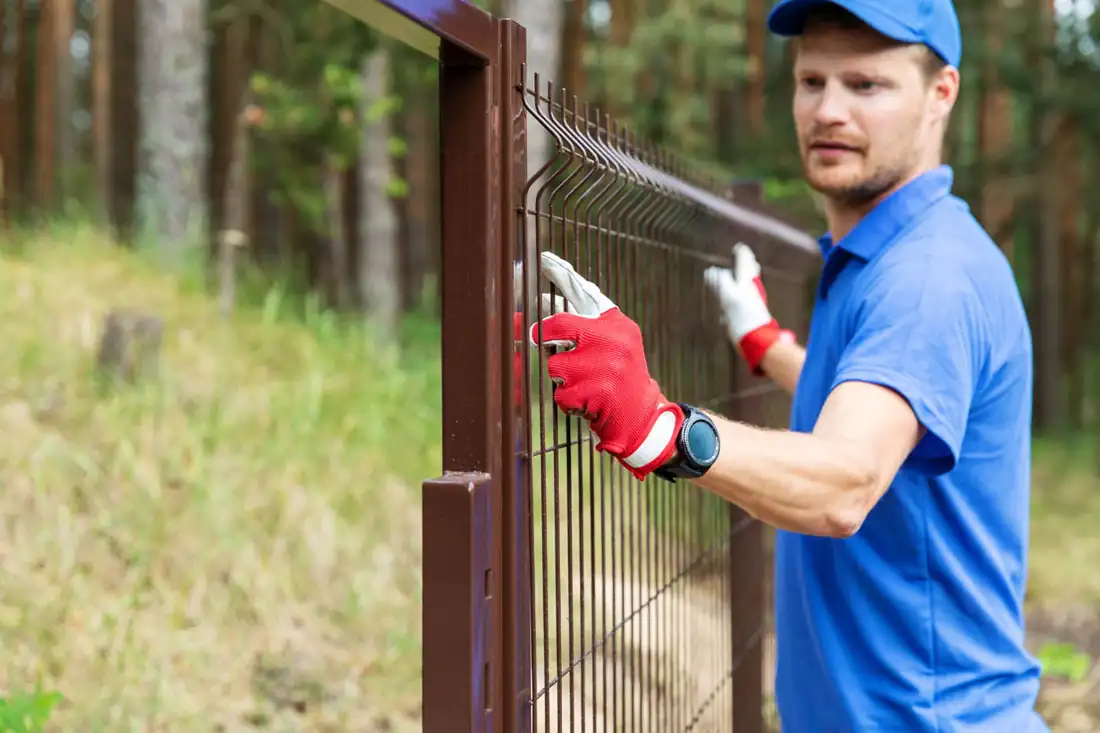
Every property is different, but our approach is built around a few principles:
- Dig below the frost line. We set posts to the depth local code requires for your property, typically 30″–36″ in our area.
- Match the post to the load. Taller privacy fences catch more wind than a 4-foot picket, and heavier materials need stronger support.
- Give gates extra attention. Gate posts carry a swinging load every day, so they get extra care in setting and bracing. A sturdy gate post is the difference between a gate that latches for years and one that drags within a season.
- Manage water. Good drainage around the base of the post helps reduce moisture that feeds frost heave and rot.
- Follow the manufacturer. Vinyl, aluminum, steel and composite systems each have installation specs. Following them keeps your manufacturer warranty coverage intact. We offer and honor manufacturer warranty coverage on every fence we install.
Does post depth differ by material?
The frost line doesn’t change with the material, but how a post is set can. Wood posts need protection from ground moisture to resist rot. Vinyl posts often have internal reinforcement for strength. Aluminum and steel posts are slimmer but strong, and chain link uses heavier terminal posts at ends, corners and gates. We’ll explain the method for your fence during your estimate.
Signs your existing posts are heaving
- Posts sitting higher than they used to, or panels no longer level.
- Gates that stick in winter and swing freely in summer.
- Latches that no longer line up.
- Leaning sections, especially after a wet spring.
If you’re seeing these, a repair may be possible. Visit our fence repair page or ask us to take a look.
Deep post holes mean digging well below the surface, so we always submit a PA One Call (811) locate request before installation.
Ready for a fence you'll love?
Book a free, no-pressure estimate. Zero dispatch fees — and we handle permits, HOA paperwork and the 811 call.
Keep learning
Want to see how post setting fits into the bigger picture? Read about our installation process, compare wood vs. vinyl, or browse the full fence FAQ. Ready for a fence built to handle our winters? Book a free estimate or call or text 484-779-6307.